


The 2024 Democratic post-presidential election autopsy revealed that voter turnout plummeted across nearly every major demographic. Yet one group stood completely alone:

Out of every racial group and age bracket in the US, white voters aged 65 and older were the only cohort that saw a net increase in turnout (+0.2%). In the midst of rising costs, stagnant wages, and a livestreamed genocide in Gaza, older white Democratic voters showed up as usual to sustain the status quo.
While retirees face fewer logistical barriers to voting than working-class people, that doesn't explain the racial divide. As someone who had been closely following the Gaza genocide for over a year at that point, I wondered: How could so many of them see people being mutilated and burned alive for over a year and remain unmoved?
But that is the wrong question. The truth is: they didn't see it. Or rather, they didn't look.
When I say “they didn't look,” this is not an accusation of individual malice, but a description of psychological self-preservation. Though the cohort contains significant economic variance, they are, on the whole, a demographic uniquely insulated from the suffering of others by unprecedented material conditions and a sophisticated propaganda machine. Because the majority of Baby Boomers vote Republican, their Democratic counterparts remain underexamined. Yet, it is precisely their cognitive dissonance that warrants a deep dive.
The right question is: why didn't they look?
To answer that, we must go back in time to World War II, and how the state constructed a fortress brick by brick.
Section 1: Post-WWII Abundance & the Subsidized Foundation (1940s–1950s)
The Baby Boomers, born between 1946 and 1964, are not a monolith. But the white, property-owning subset of this generation was born into an unparalleled economic boom following the New Deal and lucked into a windfall of which younger generations could only dream.
The United States emerged from World War II with a temporary monopoly on global production. Through the G.I. Bill, federally backed FHA mortgages, and massive investment in suburban infrastructure, the state engineered the white middle class. In addition, the Taft-Hartley Act of 1947 banning post-war sympathy strikes, wildcat actions, and secondary boycotts further fractured an already divided working class.
White property owners were set up for life with a comfortable existence. Though those who were excluded from property ownership were left behind, the barrier to entry was remarkably low: a high school graduate could buy a home, raise a family, and accumulate equity on a scale never seen before or since.
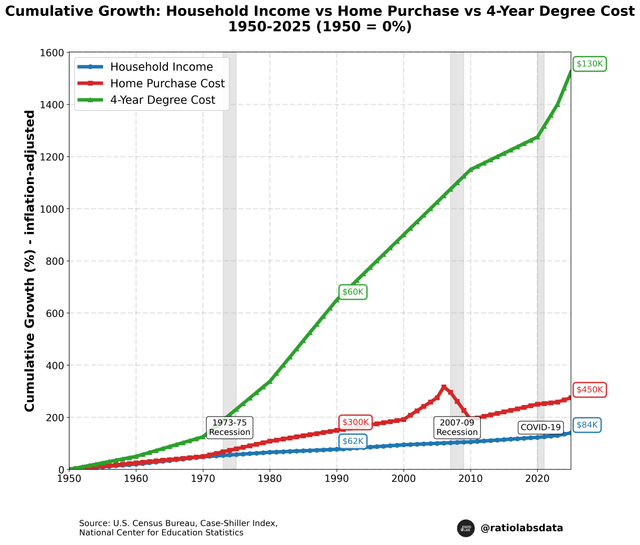
Of course, redlining and discriminatory FHA underwriting guidelines systematically excluded non-white Americans from the same opportunities, and the already vast racial wealth gap continued to widen.
And so, the core ideology of the white Boomer class began to crystallize. They insisted that their stability, which was the result of government handouts and post-war imperialism, was earned through “rugged individualism” and pulling oneself “up by the bootstraps,” setting the stage for them to pull the ladder up behind them and leave the rest of us out to dry in an increasingly hostile capitalist hellscape.
Section 2: Cultural Framing & the Advertising Boom (1950s–1960s)
Before the concrete foundation of white middle-class stability had time to set, Madison Avenue began setting up the framing of consumerism.
In the late 1940s, most Americans were too accustomed to wartime rationing to consume at the rate that ever-expanding capital required. Mass advertising, accelerated by the rapid adoption of home television, became the solution to the crisis of overproduction.
In 1950, just 9% of American homes owned a television. By the early 1960s, that figure was above 90%.
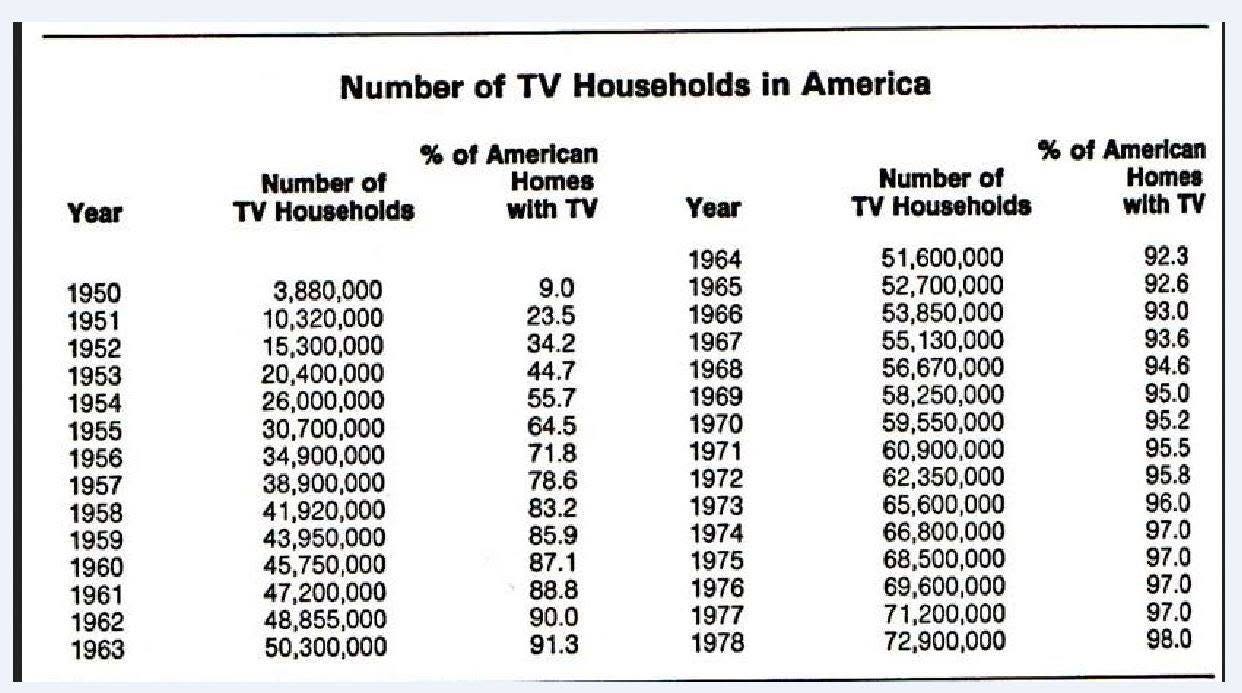
For the first time in history, an entire generation had a blaring screen installed in their living rooms, telling them what to think for hours each day.
And so, the great cultural framing began with three distinct pillars:
The Nuclear Family as a Consumption Unit
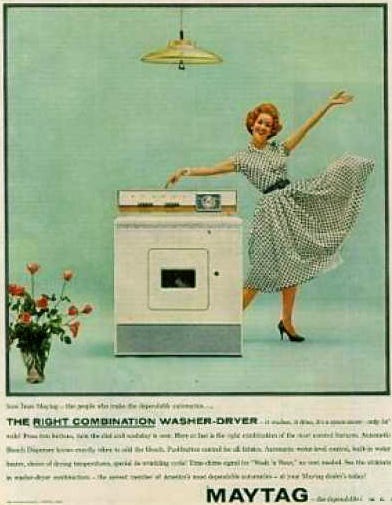
The words “American dream” conjure up an image of a single-family home with a white picket fence and a manicured lawn. This is no accident. Suburban sprawl and car dependency ensured that every home needed its own lawnmower, washer-dryer, dishwasher, and oven. Buying these things became synonymous with success.
Strict Gender Roles for Domestic Stability
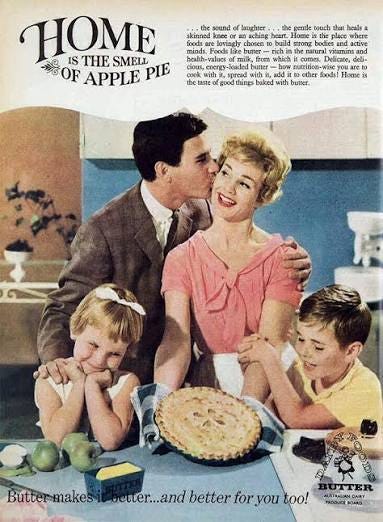
Capitalism inherently values unpaid, reproductive labor much less than working outside the home, and post-war ads scuttled women back into the home to do just that. Hyper-feminine, immaculately coiffed (white) housewives were depicted baking pies next to their smiling corporate breadwinner (and also white) husbands in suits while their lily-white children looked up at them. Such images defined the perfect American family.
Conflation of Consumer Choice with Freedom
In contrast with the Soviet planned economy, the US boasted a variety of market choices for every product. Choosing between sixty different brands of hot dogs or shampoo was considered the pinnacle of American liberty.

The messaging was clear: systemic problems do not require structural solutions; they merely require better consumer choices. This framing planted a deep-seated belief in white Boomers that the status quo could be eternally and incrementally improved through individual actions like voting.
Section 3: The Ideological Fencing and Keeping Out the Left (1950s–1970s)
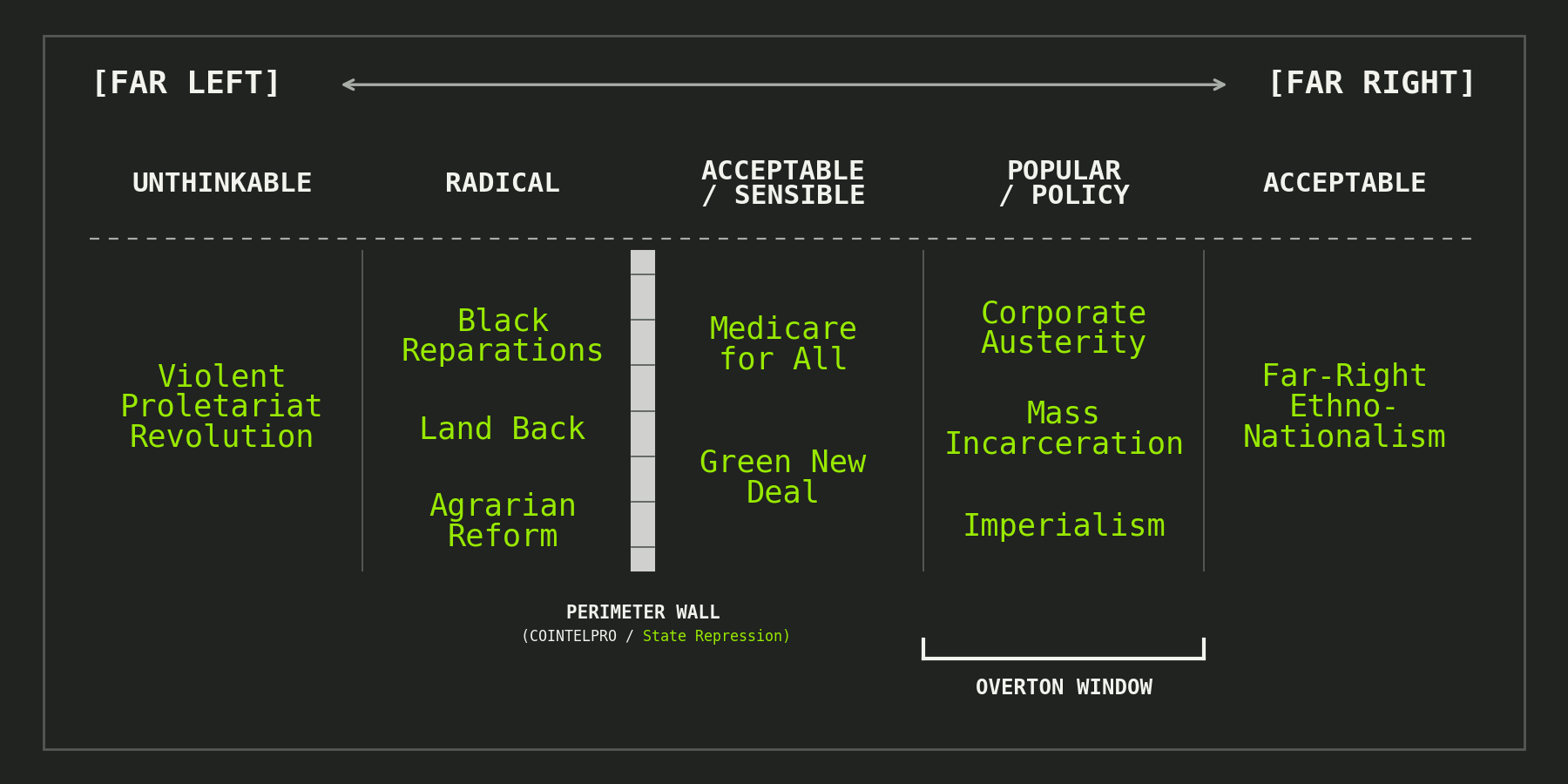
While media ads were erecting the framing at home, state repression was building a fence around the perimeter. To keep the white middle class comfortably glued to their TV screens, the state walled off the left side of the political spectrum using both the carrot and the stick.
“Give them bread and circuses and they will never revolt.”
— Juvenal, a Roman poet
The Stick: McCarthyism and COINTELPRO
The United States, as a settler-colonial state, has always boasted a long history of suppressing liberatory movements. The Hollywood Blacklist created by the House Un-American Activities Committee (HUAC) in the 1930s was one of those witch hunts that purged left-wing academics, filmmakers, and labor organizers from public life. Senator Joseph McCarthy built on that momentum to terrorize federal agencies. With socialist voices criminalized, the White Boomer generation grew up trapped in a strict duopoly: corporate liberalism on one side, naked conservatism on the other. Anything else was unthinkable.
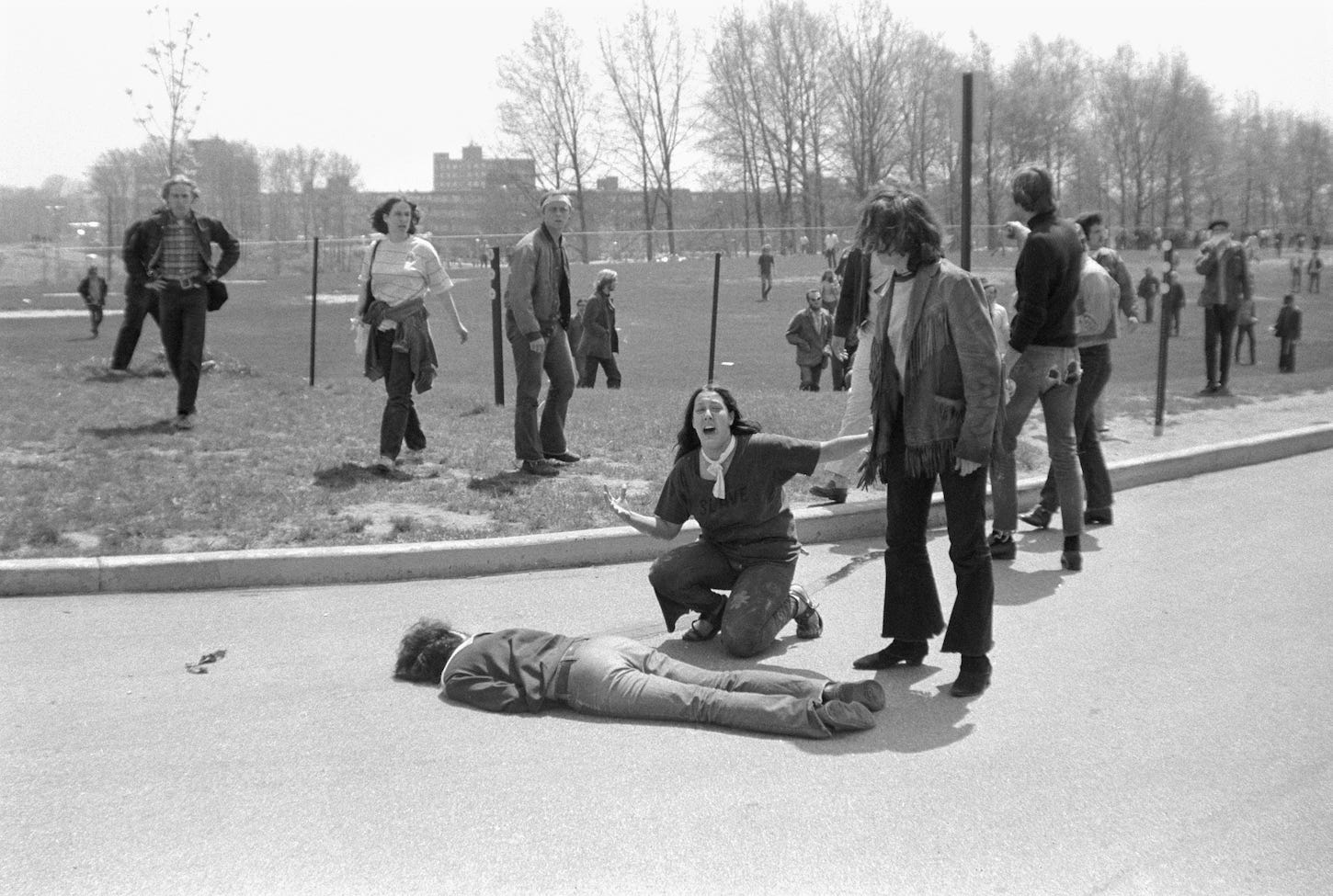
Then came the 1960s. When the civil rights movement threatened to breach the perimeter fence, the FBI expanded its Counterintelligence Program (COINTELPRO). The state used illegal surveillance and assassinations to neutralize groups like the Black Panther Party and the Young Lords before they could achieve broader class consciousness. The anti-war movement was met with a similar fate, most famously at Kent State when four people were killed and nine wounded by the National Guard for protesting the Vietnam War.
The Carrot: Co-optation and Lifestyle Radicalism
But violence was only half the strategy. Capital also deployed soft power as a hedge to funnel well-meaning people who wanted to fix the system “the right way” back into the establishment.
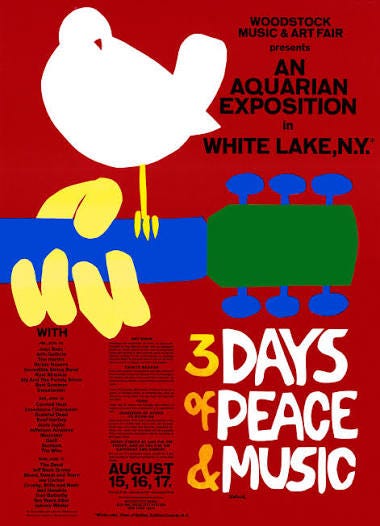
Labor unions, once a robust part of the American working class, were defanged through compromise. The 1950 treaty between the UAW and General Motors in Detroit is just one of many examples where the working class traded their true power — the right to strike — for the standard benefits that come with employment in the private sector today like health insurance and COLA (Cost of Living Adjustment). In tandem, the 1960s “hippie” counterculture among the more radical Boomers, already a minority in their age group, was stripped of its teeth and co-opted into individual aesthetics: slogans of “peace and love,” wearing bell-bottoms, listening to psychedelic rock, and smoking marijuana.
This two-pronged assault exhausted and fractured the American left, shifting the Overton window firmly to the right.
“The smart way to keep people passive and obedient is to strictly limit the spectrum of acceptable opinion but allow very lively debate within that spectrum—even encourage the more critical and dissident views. That gives people the sense that there’s free thinking going on, while all the time the presuppositions of the system are being reinforced by the limits put on the range of the debate.”
— Noam Chomsky
The capitalist motives of imperialist military interventions and domestic law enforcement were obfuscated and framed as “bringing freedom,” or manifest destiny with a fresh coat of paint. By the time the White Boomer generation reached adulthood, wealth inequality and a profit-oriented mindset became “the natural order of things.” They remained insulated within their homes, convinced that political agency was entirely limited to personal behavior like — you guessed it — voting.
Section 4: The Internal Utilities and the Neoliberal Asset Shift (1970s–1990s)
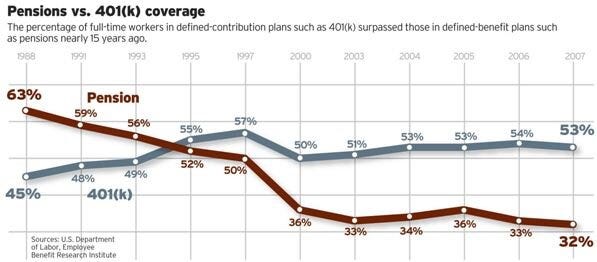
The glow of the postwar economic boom had died down by the 1970s and stagflation hit the country hard. The antidote was a then-obscure provision tucked into the Revenue Act of 1978 with which all those employed full time by the private sector have been forcibly acquainted: Section 401(k) of the Internal Revenue Code.
The shift from traditional defined-benefit pensions (long buckling under the weight of corporate mismanagement) to defined-contribution retirement funds ensured that only those who could actually contribute could retire. This simultaneously disenfranchised blue-collar Boomers while directly tethering the wealth of white-collar Boomers, now reaching their peak earning years, to Wall Street. Their retirement now depended on corporations making profits: the ultimate capitalist dream.
What came next was perhaps the single greatest contributor to wealth inequality for the generations that followed. Building on the idea of “trickle-down economics” championed by Ronald Reagan, the Tax Reform Act of 1986 reduced the dozens of federal tax brackets with a rate as high as 50% (a number already adjusted down from 70% in the 70s and 93% in the 60s) to just two (15% and 28%) with a phase-out range for high earners topping out at just 33%.
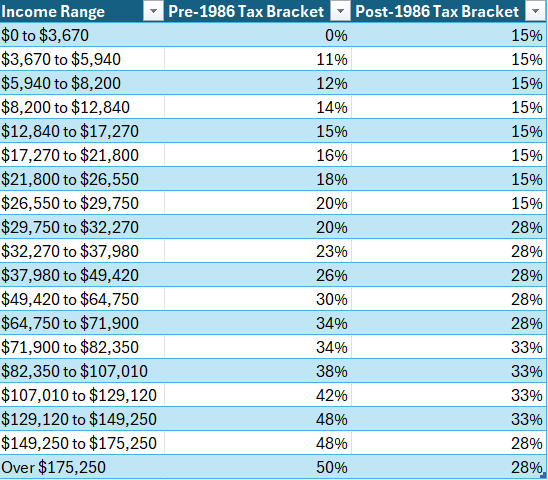
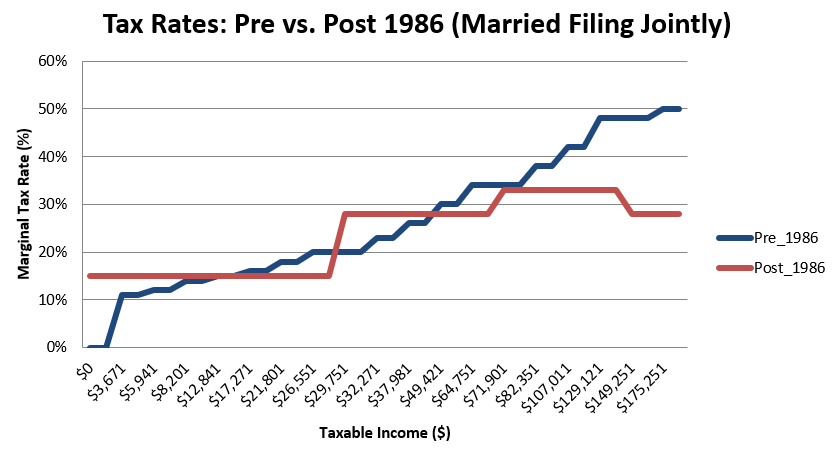
Crucially, the act preserved mortgage interest deductions while eliminating deductions on credit card debt, which — again — put those who could actually afford to buy property at an undue advantage. This was the perfect opportunity for financial institutions to roll out the Home Equity Line of Credit (HELOC), which transformed the family home (earned through the aforementioned racialized federal policies) into a personal ATM. To protect their home value, property-owning Boomers leaned into NIMBYism (Not in My Back Yard) to block affordable housing and mass transit, artificially suppressing supply to guarantee their net worth only went up.
By the late 1990s, wealthier Boomers were fully plugged into the neoliberal power grid. This paved the way for Third Way liberalism à la Bill Clinton and gave them an outlet to feel socially progressive — supporting multiculturalism, women’s reproductive freedom, and LGBTQIA+ rights — while defending the capitalist machine directly supplying power to their living rooms.
Meanwhile, blue-collar white Boomers were hit hard by deindustrialization and left with genuine economic anxiety. This bifurcation within the generation itself set the stage perfectly for what came next.
Section 5: The Bells and Whistles of the Information Bubble (1980s–2010s)
The foundation was poured, the house framed, the fence built, and the utilities wired. Now all that was left was the reinforcements to ensure the outside world could never intrude on their delusions.
The FCC's repeal of the Fairness Doctrine in 1987, which had required broadcast license holders to present opposing viewpoints on controversial issues, was the beginning of the end for mainstream journalism. Then the Telecommunications Act of 1996 came and sealed the windows, which resulted in corporate media consolidation so gradual that hardly anyone watching noticed.
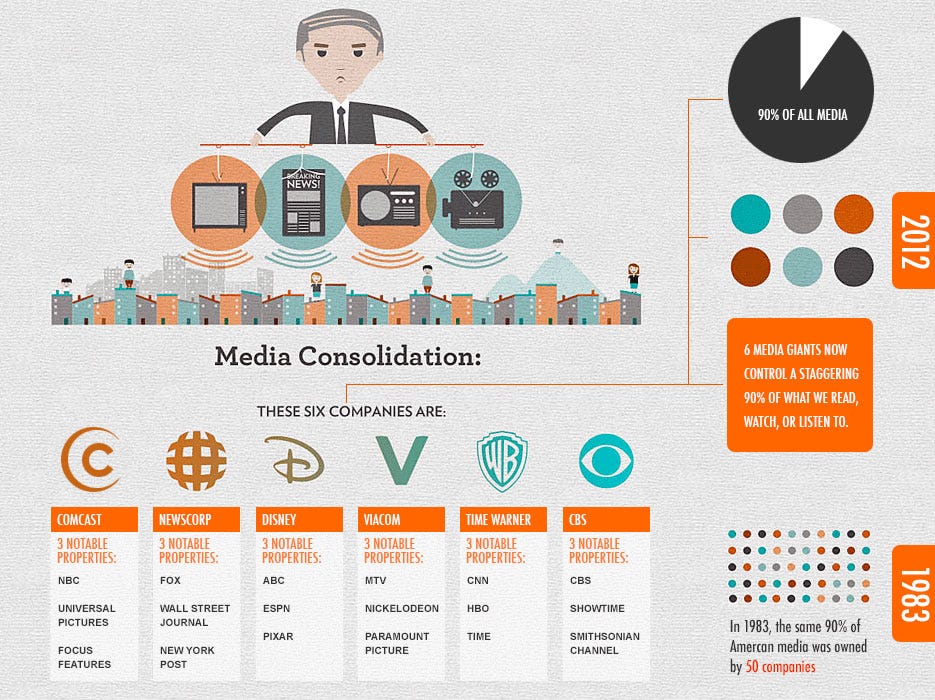
What emerged was a two-track propaganda system. On one hand, Fox News trapped blue-collar conservative Boomers in needless culture wars about transgender men in women’s sports and illegal immigrants taking American jobs. On the other hand, CNN, MSNBC, and The New York Times displayed sterile roundtable discussions of pseudointellectual white men in suits talking about human lives involved in faraway wars as if they are characters in a video game. This catered perfectly to wealthier liberal Boomers who worship bureaucracy and revel in feeling morally and intellectually superior to their conservative counterparts.
This fierce rivalry is but a performance, as both tracks project three crucial ideas to protect ruling-class interests:
The Myth of Pax Americana: The idea that the US is an inherently benevolent force. She may have lost her way or made mistakes, but her intents are pure.
The Erasure of Systemic Violence: Framing systemic horrors committed by the American death machine as “humanitarian crises” caused by a “few bad apples.”
Political Passivity: The only way to fix these problems (or continue things as they are, depending on your preference) is by voting harder.
These networks functioned as blinds that Boomers pulled shut when the reality of empire became too glaring.
The Citizens United ruling in 2010 was the final shingle on the roof. Now that elections could legally be sold to the highest bidder, both parties continued shifting to the right via the ratchet effect.
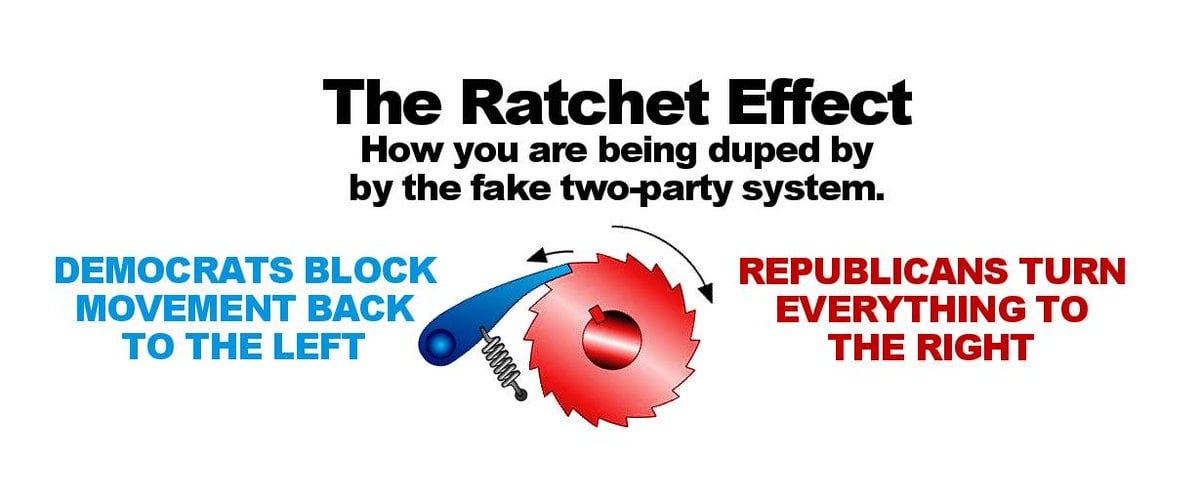
One example of this that stuck out to me personally was Kamala Harris’s rhetoric on immigration during her presidential campaign, which despite landing well to the right of Ronald Reagan’s in 1980, seemed to perturb absolutely no one.
The transformation of the white Boomer class was complete. The reactionary faction became entrenched in the MAGA cult, while the self-proclaimed “hippies” of the 1960s, who once prided themselves on being the most progressive people they knew, were now re-engineered by corporate propaganda into passive advocates of neoliberal proto-fascism.
“The media’s the most powerful entity on earth. They have the power to make the innocent guilty and to make the guilty innocent, and that’s power. Because they control the minds of the masses.”
— Malcolm X
Section 6: The Completed Fortress and the Global Fallout (Present Day)
This brings us back to the 2024 Democratic presidential election autopsy.
When younger Democratic voters of color abstained from voting in droves, they did not do so out of apathy or selfishness, but to reject a system that gave them nothing but poverty and genocide.
Older white Democratic voters, on the other hand, showed up because the system was working for them. Their homes are paid off, their retirement accounts are bloated, and legacy media tells them that to “vote blue no matter who” is the highest virtue. Meanwhile, the duopoly holds their Medicare and Social Security hostage, so they vote for the lesser evil, convincing themselves that turning a blind eye to imperial violence abroad is a fair price to pay for their domestic security.
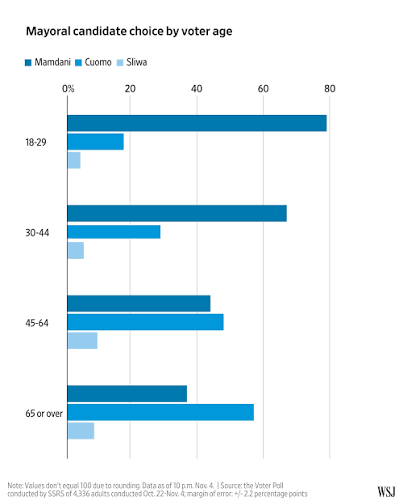
This defensive posturing continued past 2024. Take, for example, the New York City mayoral election of grassroots candidate Zohran Mamdani against dynastic politician Andrew Cuomo.
But nowhere is this phenomenon more grotesque than in the Boomers’ support for imperial violence, namely the genocide in Gaza and Zionism writ large. The idea that many liberal Boomers who purport to support human rights also pledge loyalty to an ethnosupremacist apartheid state that forces mothers to pick up pieces of their children in plastic bags and rapes prisoners with dogs is hard to fathom.
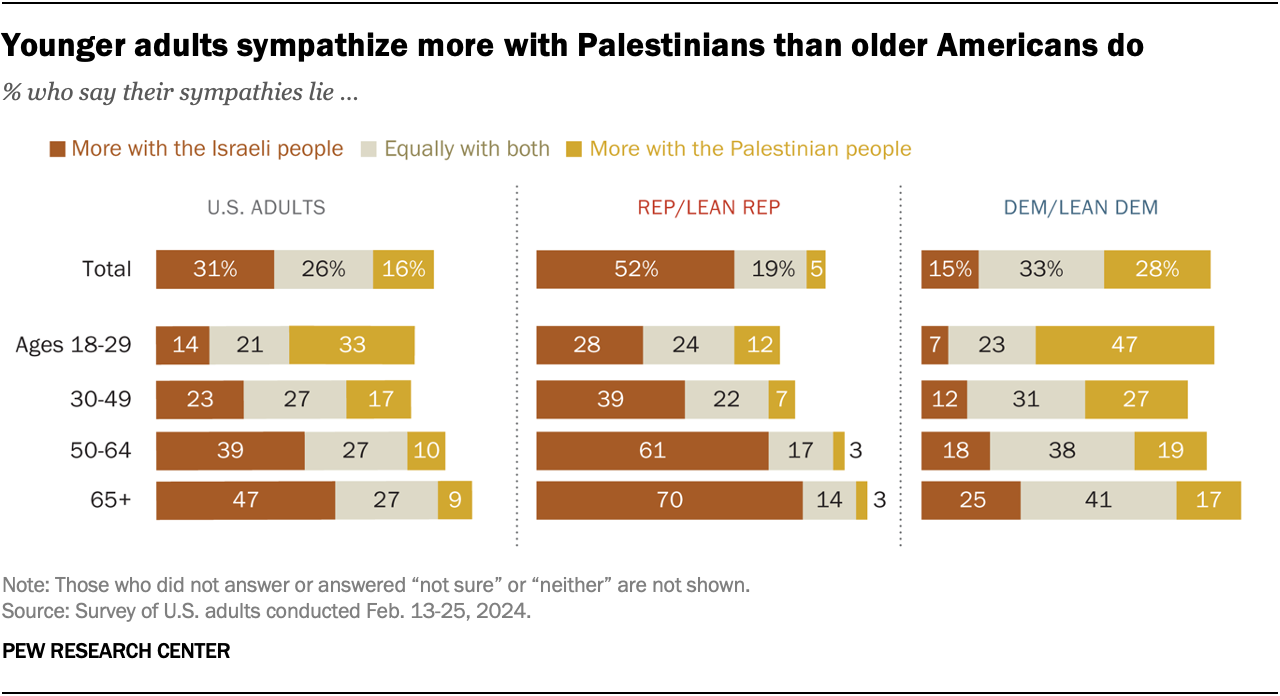
But as we established, they aren’t looking. The truth is too blinding after a lifetime of living in a fortress, and the resulting cognitive dissonance too painful to bear.
When the decades-long slow genocide in Palestine escalated in October 2023, mainstream media dutifully whitewashed Israeli crimes. Rather than showing the shredded children — something that no one with a heart could support — they used the passive voice, lied by omission, and framed the “conflict” as “complicated.”
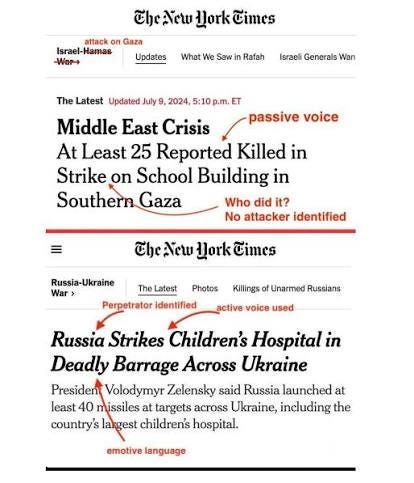
When white Boomers support Israel, they often do not know what they are supporting. But in the digital age, ignorance is rarely a passive state, as the alternative information is readily available. Choosing not to look is a subconscious act of pulling the blinds, because confronting it would shatter the tinted windows that shape their worldview, protect their assets, and preserve their moral standing.
The very machine that incinerates Palestinians is also accelerating climate change. While we are encouraged to reuse plastic bags and use soggy paper straws, the U.S. military remains the world’s single largest institutional consumer of fossil fuels and producer of greenhouse gases on the planet.
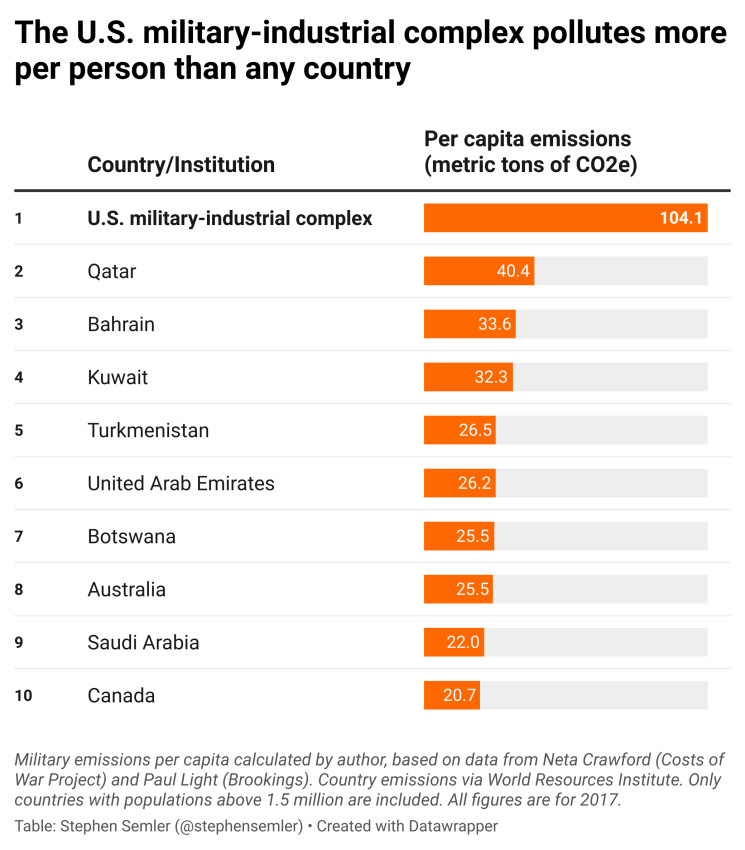
To absorb the systemic crises of overproduction, capitalism requires continuous overconsumption. Entire garages and spare bedrooms have been transformed into storage units for unopened plastic junk. We continue to buy.

“As Karl Marx said, those who live in a palace do not think about the same things, nor in the same way, as those who live in a hut. This struggle to defend the trees and forests is above all a struggle against imperialism. Because imperialism is the arsonist setting fire to our forests and savannas.”
— Thomas Sankara
Yet even the strongest of fortresses cannot forever shield its inhabitants from catastrophic blowback. The walls are caving in.
Where do we go from here?
The amount of violence perpetuated by the United States since World War II while white Boomers were living in idyllic bliss cannot be understated. Since 1948, U.S. foreign policy — be it direct military invasions, CIA-backed coups, arming right-wing death squads, or sanctions — has resulted in an estimated 10 to 20 million deaths worldwide, including but not limited to:
2 to 3 million Koreans during the Korean War (1950-1953)
2 to 3 million Vietnamese, Cambodians, and Laotians during the Vietnam War (1955-1975)
500,000 to 1 million Indonesians during the anti-communist purge (1965–1966)
300,000 to 500,000 Latin Americans through US-backed actions like Operation Condor (1960s-1990s)
100,000 to 200,000 in East Timor (1975-1999)
Over 1 million in the broader MENA region (1990s-ongoing)
At least 73,000 Palestinians in Gaza, but likely much more (2023-ongoing)
All American taxpayers fund this machine. All white Americans benefit from racialized domestic policies. All Boomers suffer from the information bubble. When these forces intersect, they produce the ultimate ideological subject: the White American Boomer, the most fiercely loyal defender of Western hegemony on the planet.
So, what do we do about it?
What I’m NOT saying
Additionally, you can support my work with a one-time contribution here.